
Article Summary:
Botox and dermal fillers are two popular anti-aging injectables. While both can be used to smooth wrinkles, their active ingredients, applications, and how they work differ completely:
- Botox works by causing temporary muscle paralysis
- Dermal fillers add volume to the injection site
When it comes to Botox vs. fillers, knowing which one is right for you depends on your treatment area and beauty goals. This blog breaks down what dermal fillers are and how they work so you can make an informed decision.
In Part 1 of our series on Botox vs. fillers, we discussed what Botox is, how it works, and what the different formulations are best used for. We’ll now break down dermal fillers’ use, ingredients, and application, and how the two injectables compare.
Botox Vs Fillers Part 2: All About Dermal Fillers
In recent years, dermal fillers have become the second most popular non-invasive cosmetic procedure behind Botox. Dermal fillers are also injectables that can be used to smooth wrinkles, but unlike Botox, they can be used to create volume, too.
How Do Dermal Fillers Work?
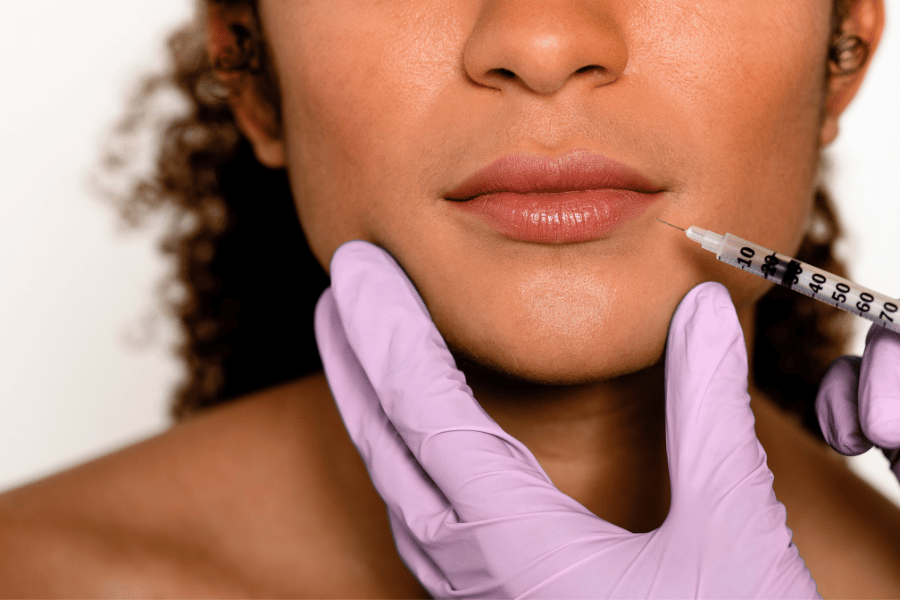
Dermal fillers are gel-like or water-like substances that are injected beneath the skin to either mimic the appearance of fat that we lose as we age (for example, on the back of the hands or on the cheeks) or to “push out” the wrinkles by creating volume. The depth of the injection and the amount of fillers needed depend on the treatment area and how much volume is desired. Unlike Botox, fillers are not broken down by the body over time, but providers can safely dissolve some fillers by injecting an enzyme solution if a patient becomes unhappy with their results.
The Different Types of Dermal Fillers
There are dozens of FDA-approved dermal fillers, each with one of four active ingredients. At Magnolia Medical Aesthetics, we carry the following:
- Restylane: The active ingredient in Restylane is a Hyaluronic Acid (HA) gel. HA occurs naturally in the body and binds with water, increasing the plumping effect of the gel. It’s often used in areas that are more mobile or require a more precise application.
- Juvederm: This filler also uses an HA gel, but one that is more hydrophilic, meaning it will attract more water and spread slightly for a softer plumping effect.
- Radiesse: The active ingredient in Radiesse is microspheres of calcium hydroxylapatite (CaHA) suspended in a more watery solution. It creates an immediate plumping effect upon injection, and the microspheres become a sort of scaffold for your natural collagen to grow on. It is typically injected more deeply and used in areas with deep wrinkles.
Restylane and Juvederm can be dissolved with an injection of hyaluronidase. Radiesse, which has a different active ingredient, can not be dissolved but tends to resist migration more than other fillers. Your provider will discuss any concerns you may have and help you choose the appropriate filler for your goals.
What Areas Do Dermal Fillers Treat?
Typical applications for dermal fillers include:
- Plumping lips
- Smoothing wrinkles caused by collagen loss
- Adding volume to the cheeks and undereyes
- Fixing asymmetries on the nose or jawline
- Replacing fat loss on the back of the hand
What Results Can You Get From Dermal Fillers?
Dermal fillers are ideal for areas where volume has been lost due to aging, but can be used to treat deeper folds and wrinkles. It has greater longevity than Botox, with results typically lasting 6 – 18 months, depending on the injection site.
Botox VS. Fillers: Which Treatment is Right for Me?
While we can not make a complete recommendation until we discuss your unique beauty goals and personal health, there are a few guidelines when considering Botox vs. fillers:
- Do you want to add volume or just diminish wrinkles? If increasing the plumpness of your face or lips is important to you, dermal fillers may be the appropriate choice.
- Do you want a more “lifted” appearance? Adding volume with fillers could make an area look heavier. Lift is better achieved by using Botox.
- Are the wrinkles dynamic or static? Dynamic wrinkles are caused by repeated muscle movements, like frowning or furrowing your brows. Static wrinkles are the result of losing collagen, elastin, and fat as part of the aging process. Botox is often used to treat dynamic wrinkles, while fillers are used for static ones.
- What area are you treating? If you are treating areas like neck bands, glabella lines, and crow’s feet, dermal fillers are unlikely to be recommended. Conversely, cheeks and tear troughs are more likely to be treated by fillers rather than Botox.
We understand that choosing a procedure can feel daunting. Our licensed medical staff is here to walk you through the process and create a treatment plan to achieve realistic, balanced, and substantial results. We’ll provide a recommendation for Botox vs. fillers, or a combination, depending on your facial structure and desired results.
At Magnolia Medical Aesthetics in Greenville and Fort Mill, South Carolina, your injections are always performed by a doctor with advanced medical knowledge and decades of experience, so you can be confident in your results. Reach out today to get started!